Updated 25 NOV 2026 · Reviewed by Andrew Bowden, OptometristDry eye is one of the most common reasons people come to see us. It can feel like grit in your eyes, a constant tiredness, or vision that blurs and clears as you blink. Surprisingly, it can also make your eyes water.
The good news is there's usually a clear reason behind it, and once we know the cause, there's a lot we can do to help.
What is dry eye?
Your tears do more than keep your eyes wet. A healthy tear film has three layers: an oily outer layer, a watery middle layer, and a mucus layer that helps it stick to the eye. When any of these layers isn't working properly, your eyes can't stay comfortably moist.
Dry eye usually falls into one of two types:
Evaporative dry eye: your tears evaporate too quickly, often because the oil glands in your eyelids (meibomian glands) are blocked. This is the most common type.
Aqueous deficient dry eye: your eyes don't produce enough of the watery part of your tears.
Many people have a mix of both.
Common causes of dry eye
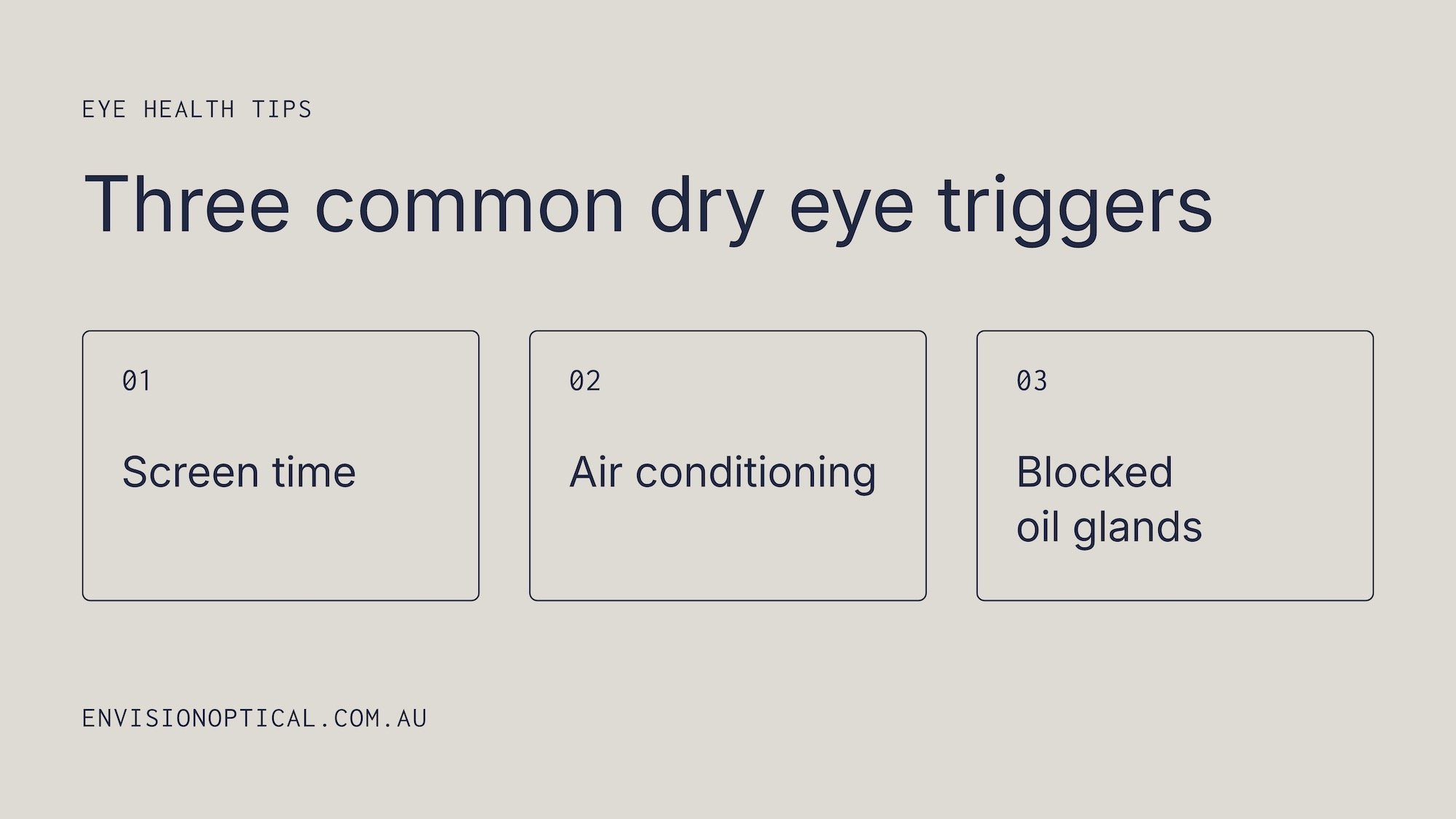
• Blocked or underactive meibomian glands
• Long hours on screens, which reduces how often you blink
• Air conditioning, heating, and dry or windy weather
• Contact lens wear
• Ageing and hormonal changes, including menopause
• Some medications, such as antihistamines, decongestants and antidepressants
• Some health conditions, including Sjögren's syndrome, lupus and thyroid disorders
Signs and symptoms to watch for
• Burning, stinging or gritty eyes
• Red or irritated eyes
• Tired, heavy eyes, especially late in the day
• Blurred vision that clears when you blink
• Sensitivity to light
• Difficulty driving at night
• Watery eyes
“If you’re reaching for eye drops most days, it’s worth having your eyes properly assessed.”
How we assess dry eye
A dry eye assessment looks at why your eyes are dry, not just whether they are. We use digital tear and gland scanning to look at the quality of your tear film and the health of your meibomian glands. That tells us which treatments are likely to suit you.
Dry eye treatment options
Your treatment plan depends on what we find. It may include one or more of:
Home care: warm compresses, lid hygiene and the right eye drops for your type of dry eye
Lifestyle changes: screen breaks, a humidifier at home or work, and wraparound sunglasses outdoors
IPL (intense pulsed light): reduces the inflammation around your eyelids that affects gland function. Read more about IPL
LipiFlow: warmth and gentle pressure to clear blocked glands, available at Burleigh Waters. Read more about LipiFlow
Low level light therapy: a gentle, soothing light treatment for the eyelids
Prescription treatments or punctal plugs for some cases
If you need care from a specialist, we'll arrange the referral.
Frequently asked questions
-
Dry eye is often an ongoing condition, but it can usually be managed well. The aim is to treat the cause and keep your eyes comfortable long term.
-
When your tear film is poor, your eyes can overproduce watery tears to compensate. These tears don't have enough oil to stay on the eye, so they run off instead of protecting it.
-
No. You can book a dry eye assessment directly with us at either clinic.