

Keratoconus • BURLEIGH WATERS & TWEED HEADS
Keratoconus care on the Gold Coast
When glasses stop giving you clear vision, specialty contact lenses often can. We map the shape of your cornea, fit lenses made for your eyes and keep a close eye on any changes.
No referral needed · Two Gold Coast clinics
SIGNS AND CAUSES
Does this sound familiar?
- Blurry or distorted vision that glasses don't fully fix
- A prescription that keeps changing, often with more astigmatism
- Glare, halos or streaks around lights at night
- Seeing double or ghosted images in one eye
- Eyes that are sensitive to bright light
- Regular contact lenses that don't sit well or give clear vision
Keratoconus usually shows up between the teenage years and the mid 20s, which is why regular eye exams matter at that age.
Common Risk Factors
UNDERSTANDING
What's happening to the cornea
The clear front window of the eye thins and starts to bulge forward.
A healthy cornea is a smooth, even dome. With keratoconus, it gradually thins and pushes forward into more of a cone shape. That irregular surface scatters light, so vision becomes blurry and distorted in a way regular glasses can't fully correct.
It's usually gradual
Keratoconus tends to progress through the teens and 20s, then often slows or settles by your mid 30s. Everyone is different, so we track it closely.
Catching changes early matters
Regular corneal mapping shows whether your keratoconus is changing. If it is progressing, we can refer you to a corneal specialist early, when there are more options.
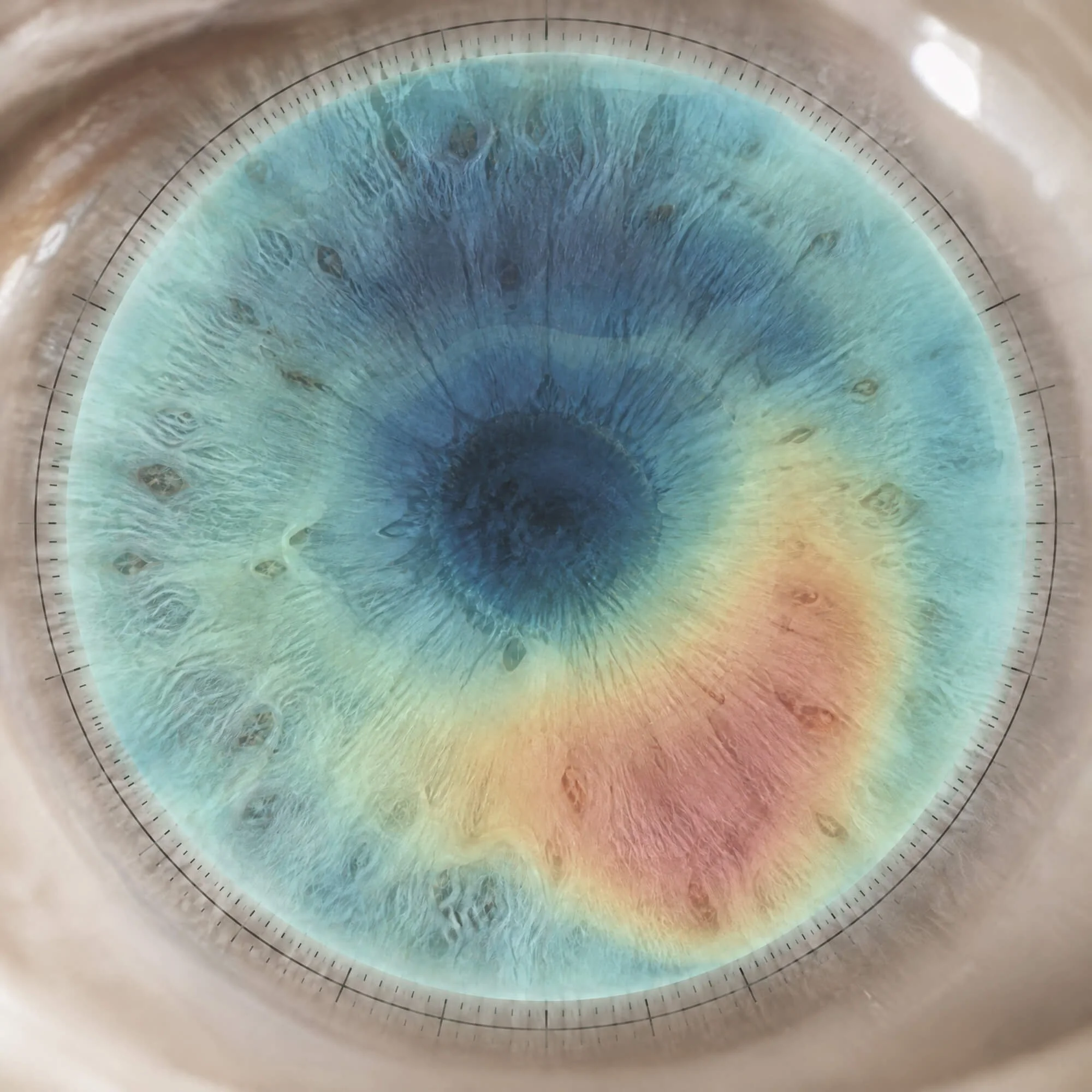
Corneal topography map showing a steep, irregular area below the centre of the cornea, typical of keratoconus
How we assess
Mapping your cornea first
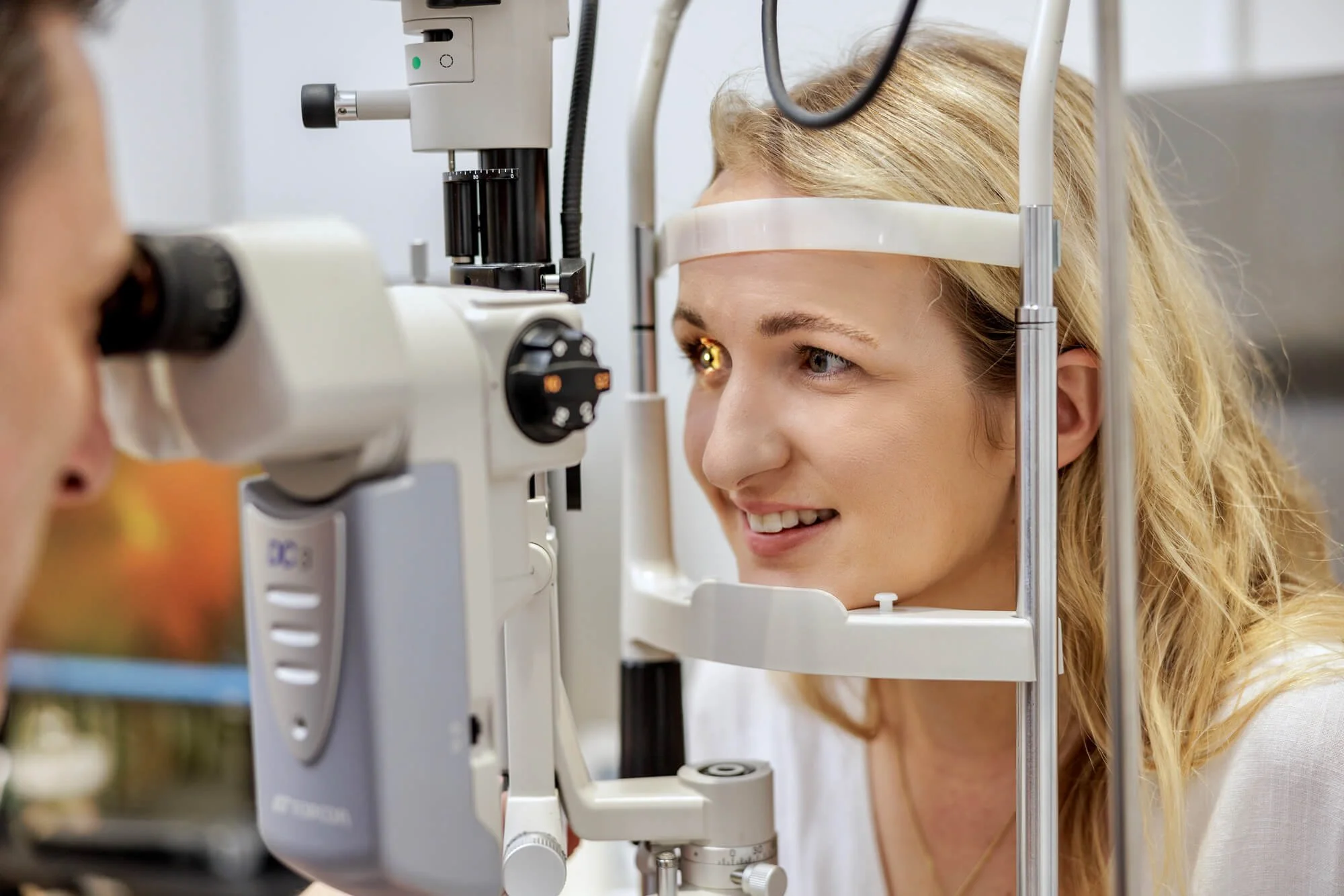
Keratoconus is often picked up during a routine eye exam. From there, detailed mapping shows the exact shape of your cornea and becomes the baseline for every check after.
Your keratoconus assessment includes:
- A full eye exam and vision check
- Digital corneal mapping (topography)
- A detailed look at the front of the eye with a microscope
- A chat about your symptoms, allergies and eye rubbing
- A comparison with earlier maps to check for change
*Corneal mapping isn't covered by Medicare, so a small private fee applies.

TREATMENT OPTIONS
Lens options matched to your eyes
In the early stages, glasses can often still do the job. As the cornea becomes more irregular, specialty contact lenses give your eye a smooth new surface to see through.
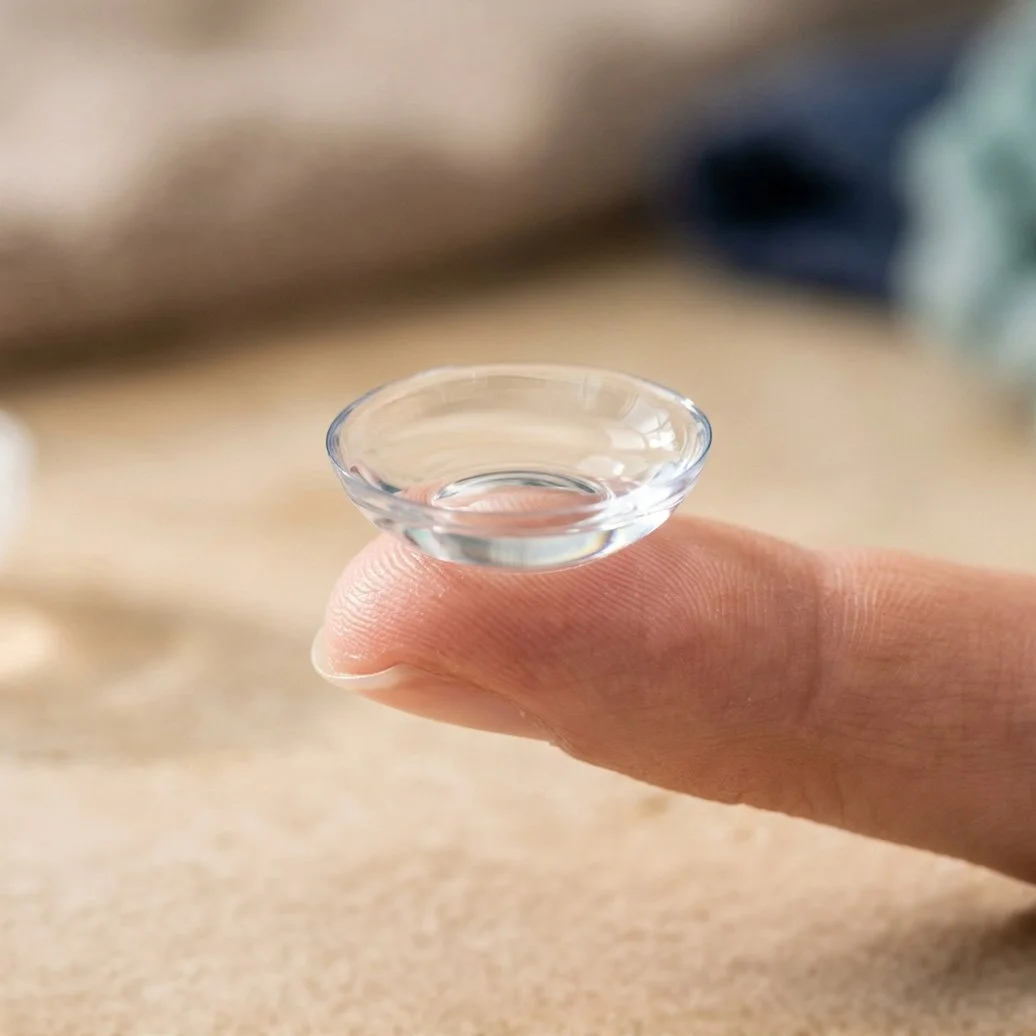
Scleral lenses
Larger rigid lenses that vault over the cornea and rest on the white of the eye. A layer of saline sits underneath, giving clear vision and comfort, even with more advanced keratoconus.
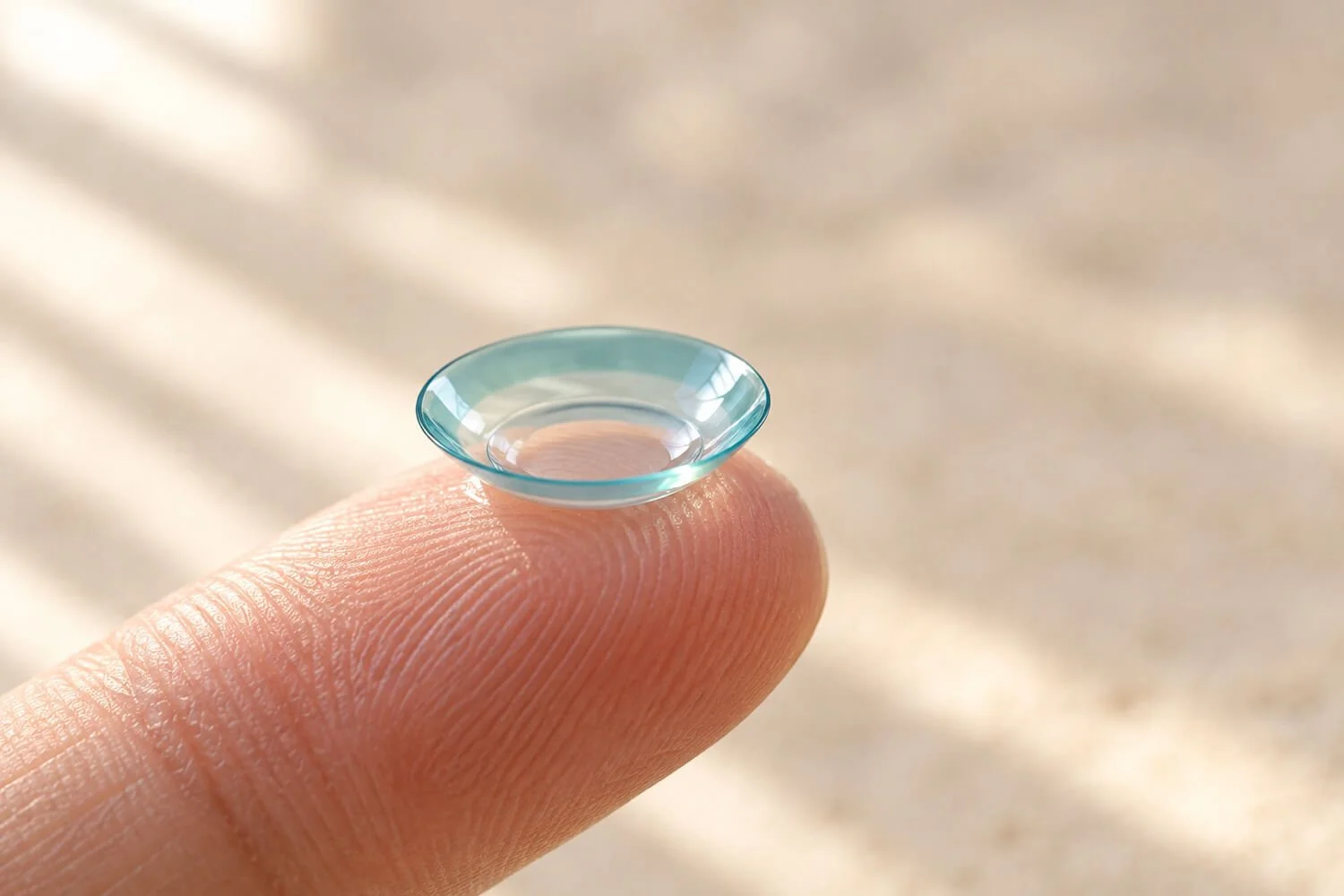
Rigid (RGP) lenses
Smaller rigid gas permeable lenses that sit on the cornea and smooth out its irregular shape. Often a good first lens for mild to moderate keratoconus.
Other options we may recommend
Glasses: for early keratoconus, or as a backup to lenses
Hybrid lenses: a rigid centre with a soft outer skirt
Cross-linking referral: a procedure done by a corneal specialist that aims to stop progression
Six-monthly reviews: mapping and lens checks to track change
Who You’ll See
Experienced specialty contact lens fitters
Our team is led by principal optometrist Andrew Bowden, who has been caring for Gold Coast eyes since graduating from QUT with honours in 1995. Specialty and complex lens fitting is a big part of the work we do across both clinics.

Between appointments
Everyday habits that help
01
Try not to rub your eyes. Rubbing is linked to keratoconus getting worse.
02
Keep allergies and itchy eyes under control so you're less tempted to rub.
04
Keep your six-monthly checks, even when your vision feels stable.
03
Clean and store your lenses exactly as shown, and never use tap water.
Questions
Keratoconus FAQs
-
There's no cure, but it can be managed well. Specialty lenses give clear vision, and cross-linking may help stop it progressing.
-
Keratoconus affects the clarity of your vision, not the health of the nerve at the back of the eye. With the right lenses and monitoring, most people keep good, functional vision.
-
Most people find them more comfortable than they expect, because the lens rests on the white of the eye instead of the sensitive cornea. There's a short learning curve for putting them in and taking them out.
-
A procedure done by a corneal specialist. It uses riboflavin drops and UV light to strengthen the cornea and aims to stop keratoconus progressing. We'll refer you if it suits your eyes.
-
No. You can book a keratoconus assessment directly at either clinic.
-
It can run in families, so if you have keratoconus, it's worth having your children's eyes checked as they reach their teens.
-
It depends on your extras cover. Some funds offer higher rebates for lenses needed for keratoconus, so check with your fund.
Ready to see more clearly?
Book a keratoconus assessment at Burleigh Waters or Tweed Heads.
No referral needed.
Burleigh Waters
Treetops Plaza Shopping Centre, Shop 4B
7 Classic Way, Burleigh Waters QLD 4220
Tweed Heads
Tweed Health For Everyone Superclinic, Shop 4
33-35 Corporation Circuit, Tweed Heads NSW 2486